
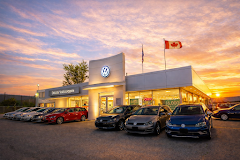
Volkswagen Vehicles for Sale Near Midland, Ontario
Shopping for a Volkswagen vehicle near Midland, Ontario? Expanding your search to Orillia can give you more Volkswagen models, trims, colours and...
Read moreOrillia Volkswagen
345 West Street South, Orillia, ON, L3V 5H1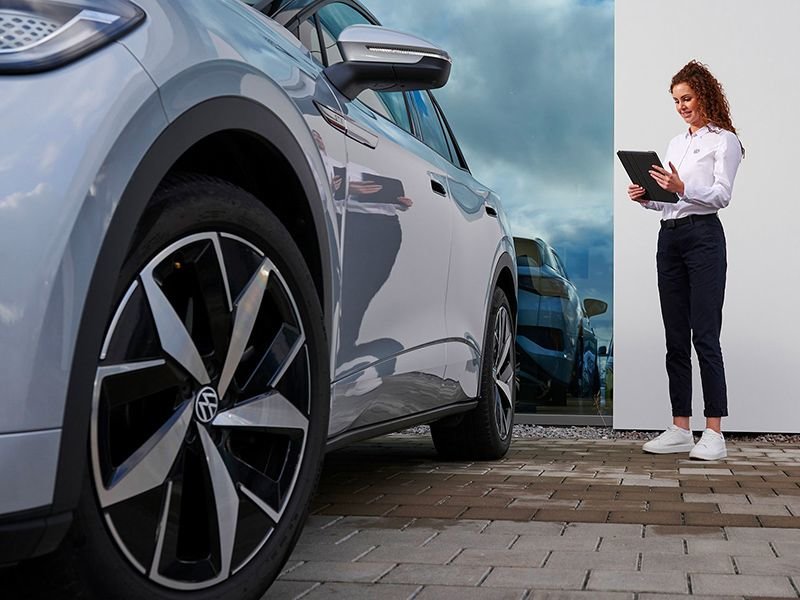
All-wheel drive is no longer a specialty feature reserved for off-road vehicles or extreme conditions. Today, it plays a central role in how modern cars, crossovers, and SUVs deliver safety, confidence, and usable performance in everyday driving. Among the most established AWD systems in the automotive world is Volkswagen’s 4MOTION—a name that has existed for decades, yet is often misunderstood.
While many drivers recognize the badge, fewer understand what 4MOTION actually does, how it differs across models, or why it behaves differently from other AWD systems. To fully appreciate its value, it helps to look beyond marketing language and into the engineering philosophy behind it.
Unlike some manufacturers that rely on one standardized AWD layout, Volkswagen uses 4MOTION as a collective name for several all-wheel-drive systems designed for different vehicle architectures.
Introduced in the 1980s, 4MOTION was developed to improve traction and stability across a wide range of driving conditions. Over time, it evolved into a modular approach to AWD, allowing Volkswagen to tailor drivetrain behaviour depending on vehicle size, engine orientation, and performance intent.
As a result, two vehicles wearing a 4MOTION badge may use very different hardware—yet still share the same core goal: intelligent, seamless torque distribution.
Regardless of configuration, every 4MOTION system is engineered around a single principle: deliver engine torque to the wheels that can use it most effectively, in real time.
Rather than locking all four wheels together mechanically, 4MOTION relies on predictive electronics and adaptive hardware. The system constantly evaluates:
This information is processed by an electronic control unit (ECU) that determines how much torque should be sent to each axle—or, in some cases, to individual wheels.
Although layouts differ, most 4MOTION systems rely on a common set of components working together:
Volkswagen applies different AWD philosophies depending on the vehicle's purpose.
Commonly found in compact and midsize crossovers and cars, this configuration prioritizes efficiency while maintaining traction when needed.
Under normal driving conditions, these vehicles operate primarily as front-wheel drive. When a slip is detected—or anticipated—the system engages the rear axle automatically.
Typical characteristics include:
This setup is widely used in vehicles such as the Tiguan, Atlas Cross Sport, and several Golf variants.
In higher-performance models, such as the Golf R, 4MOTION takes a different approach. These systems employ a mechanical center differential, often of the Torsen or fifth-generation design.
Key traits include:
This version of 4MOTION is engineered not just for traction, but for driver engagement and dynamic control.
The real value of AWD is felt not in spec sheets, but in how a vehicle behaves on the road.
On wet pavement, snow-covered roads, gravel, or loose surfaces, 4MOTION redirects torque to the wheels with available grip, significantly reducing wheelspin.
With four driven wheels sharing the workload, engine torque can be applied more aggressively without overwhelming the front tires.
By working alongside ESC, 4MOTION helps manage understeer and keeps the vehicle balanced when cornering on low-grip surfaces.
Drivers often notice the greatest benefit during rapidly changing conditions—when roads transition from dry to wet or lightly snow-covered without warning.
AWD systems do add weight and complexity, but modern 4MOTION designs are optimized to minimize efficiency losses.
Front-wheel drive remains dominant in steady-state cruising
Torque couplings disengage when traction demands are low
Drivetrain drag is carefully controlled
In real-world comparisons between AWD and FWD versions of similar vehicles, the difference in combined fuel consumption is typically around 0.5 to 1.5 L/100 km—a modest trade-off given the added control and safety.
For drivers who face variable weather, mixed road conditions, or simply want added confidence behind the wheel, 4MOTION delivers meaningful benefits. Even in urban environments, where traction can change unexpectedly, the system enhances control without significantly impacting efficiency.
Rather than being a niche feature, 4MOTION is a well-integrated driving aid—one that quietly works in the background to make everyday driving more secure, more composed, and more predictable.
Volkswagen Vehicles for Sale Near Midland, Ontario
Shopping for a Volkswagen vehicle near Midland, Ontario? Expanding your search to Orillia can give you more Volkswagen models, trims, colours and...
Read more
Volkswagen Vehicles for Sale Near Muskoka, Ontario
Shopping for a Volkswagen vehicle near Muskoka, Ontario? Expanding your search to Orillia can give you more Volkswagen models, trims, colours and...
Read more
Volkswagen Dealership in Orillia, Ontario: Your Guide to Orillia Volkswagen
Looking for a Volkswagen dealership in Orillia, Ontario? Orillia Volkswagen helps drivers throughout Orillia and Central Ontario shop for new...
Read morePowered and developed by
