Volkswagen IQ.DRIVE Explained: 2026 Features, Travel Assist & Safety
What does Volkswagen IQ.DRIVE actually do? Discover how Travel Assist, Lane Assist, Adaptive Cruise Control and other driver-assistance technologies work on Canadian Volkswagen vehicles.
What Is Volkswagen IQ.DRIVE?
Volkswagen IQ.DRIVE is a collection of driver-assistance technologies designed to support everyday driving. Depending on the model and equipment, these systems can help monitor traffic, maintain following distance, provide lane guidance and warn drivers about potential hazards.
IQ.DRIVE uses vehicle sensors, cameras and electronic control systems to provide assistance during situations such as highway travel, changing lanes and approaching slower-moving traffic.
For Ontario drivers travelling between Orillia, Barrie, Midland and Muskoka, understanding these features can help when comparing new Volkswagen models.
Volkswagen driver-assistance systems do not replace an attentive driver. You must remain responsible for steering, braking, observing traffic and operating the vehicle safely.
Volkswagen IQ.DRIVE Features Explained
Volkswagen offers several driver-assistance functions under the IQ.DRIVE name. Exact feature availability depends on the vehicle, model year and trim.
Travel Assist
Combines adaptive cruise control with steering assistance to help maintain speed, following distance and lane position.
Adaptive Cruise Control
Adjusts vehicle speed based on traffic ahead to help maintain a selected following distance.
Lane Assist
Uses detected road markings to warn about unintended lane departure and provide corrective steering assistance within system limits.
Front Assist
Monitors certain forward collision risks and may provide warnings or automatic emergency braking.
Active Blind Spot Monitor
Helps detect certain vehicles in adjacent lanes and can warn drivers when changing lanes.
Emergency Assist
On equipped models, may intervene when the driver appears unresponsive, including warnings and controlled braking within system limitations.
How Does Volkswagen Travel Assist Work?
Travel Assist is one of Volkswagen's most comprehensive driver-assistance technologies. It combines features of Adaptive Cruise Control and Lane Assist to help manage speed, distance and steering support.
Travel Assist Can Help With:
- Maintaining a driver-selected following distance
- Adjusting speed when traffic ahead slows
- Providing steering assistance within a detected lane
- Supporting driving in certain stop-and-go traffic situations
Drivers must keep their hands on the steering wheel and supervise the vehicle continuously.
Travel Assist provides hands-on, semi-automated steering and speed assistance consistent with Level 2 driver-assistance functionality. The driver remains responsible for the entire driving task and must be ready to intervene immediately.
Is Travel Assist Standard on Every Volkswagen?
No single equipment rule applies to every model and trim. Volkswagen Canada identifies Travel Assist as standard on some 2026 vehicles and available on others.
Buyers should confirm the exact equipment included on the Canadian model and trim they are considering.

Lane Assist vs. Travel Assist: What's the Difference?
Although both technologies can provide steering support, they are designed to serve different functions.
| Feature | Lane Assist | Travel Assist |
|---|---|---|
| Primary purpose | Help prevent unintended lane departure | Combine lane guidance with speed assistance |
| Steering support | Corrective assistance | Ongoing lane-centering assistance when available |
| Following distance | Not its primary function | Supported through Adaptive Cruise Control |
| Driver supervision | Always required | Always required |
| Lane markings | Required for relevant functions | Required for lane-guidance functions |
How Does IQ.DRIVE Enhance Lane Assist?
Lane Assist can provide corrective steering input when the vehicle approaches a detected lane boundary without an indicated lane change.
When combined with Adaptive Cruise Control through Travel Assist, Volkswagen can provide more continuous lane guidance while also adjusting vehicle speed and following distance.
Both features rely on operating conditions such as visible road markings and functioning sensors.
Adaptive Cruise Control vs. Regular Cruise Control
Traditional cruise control maintains a selected speed until the driver changes or cancels it.
Adaptive Cruise Control adds the ability to detect certain vehicles ahead and adjust speed to help maintain a selected following distance.
Regular Cruise Control
Maintains a selected speed but generally requires the driver to respond to slower traffic.
Adaptive Cruise Control
Can reduce or increase speed in response to detected traffic ahead within system limits.
What Is Stop-and-Go Functionality?
Stop-and-go capability allows an equipped vehicle to assist with braking to a stop and moving again in certain traffic conditions.
Driver confirmation may be necessary to resume following a longer stop, depending on the system and vehicle.
Front Assist and Automatic Emergency Braking
Volkswagen Front Assist is designed to identify certain potential forward collision situations.
Depending on the model and circumstances, it can provide visual and audible warnings and may apply automatic emergency braking when a collision risk is detected.
What Can Front Assist Detect?
Depending on the equipment and operating conditions, Front Assist may detect vehicles, pedestrians and cyclists ahead.
No. Detection and braking performance have limitations. Vehicle speed, visibility, weather, road conditions and the type of obstacle can affect system response. Drivers must never rely on automatic emergency braking as a substitute for safe driving.
Blind Spot Monitoring and Rear Traffic Alert
Active Blind Spot Monitor
Can warn drivers when certain vehicles are detected in adjacent lanes. On equipped vehicles, additional steering intervention may be available.
Rear Traffic Alert
Helps monitor traffic approaching from the sides while reversing, such as when backing out of a parking space.
These systems provide supplementary awareness but do not replace checking mirrors, shoulder checks or careful observation while reversing.
What Is Volkswagen Emergency Assist?
Emergency Assist is intended to respond to certain situations in which an equipped vehicle detects that the driver is unresponsive.
When applicable operating conditions are met, the vehicle may issue escalating warnings and ultimately attempt to bring the vehicle to a controlled stop.
Specific interventions and emergency communication capabilities depend on vehicle equipment and connected service availability.
Emergency Assist is not a guarantee against a collision and is not intended to replace medical attention or responsible driving.
Which 2026 Volkswagen Models Offer IQ.DRIVE?
IQ.DRIVE technologies are available across much of the Canadian Volkswagen lineup, but the exact features vary by model, trim and configuration.
| 2026 VW Model | IQ.DRIVE Considerations |
|---|---|
| Tiguan | Driver-assistance technology across the Canadian lineup; confirm individual features by trim. |
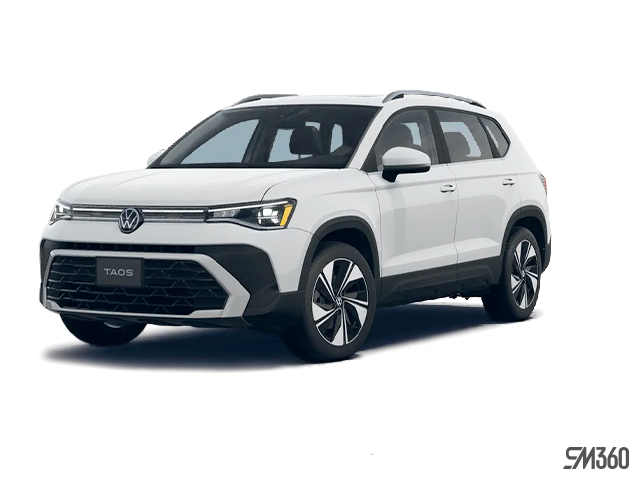
| Taos | Volkswagen Canada lists Front Assist, Side Assist and Travel Assist among standard IQ.DRIVE equipment. |
| Atlas | Includes Travel Assist, Front Assist and Side Assist among listed standard features. |
| Atlas Cross Sport | Offers Travel Assist and other driver-assistance technologies. |
| Jetta | Includes standard core assistance features, with Travel Assist availability depending on trim. |
| Golf GTI / Golf R | Driver-assistance equipment varies by model and configuration. Confirm Canadian specifications. |
This is a general model overview, not a definitive trim-by-trim equipment chart. Always check Volkswagen Canada's current Canadian buyer's guide or the vehicle window sticker.
Volkswagen IQ.DRIVE in the 2026 Tiguan
The 2026 Tiguan combines its standard Canadian 4MOTION all-wheel drive with driver-assistance technologies intended to support everyday commuting and highway travel.
Depending on the trim, drivers can benefit from features such as Front Assist, Side Assist, Lane Assist, Adaptive Cruise Control and Travel Assist.
Standard 4MOTION AWD helps manage driving traction, while IQ.DRIVE addresses a different set of driver-assistance functions. They should not be confused with one another.
Compare Canadian Tiguan trims, standard all-wheel drive, the 201-hp and 268-hp engines, towing and available technology.
How Does IQ.DRIVE Perform in Canadian Winter Conditions?
Driving around Orillia and Central Ontario can involve changing road conditions, snow-covered lane markings, freezing rain and reduced visibility.
These conditions can affect the cameras and sensors used by some IQ.DRIVE technologies.
Important Winter Considerations
- Snow or ice may block sensors and reduce system availability.
- Lane Assist may have difficulty detecting covered or faded road markings.
- Heavy precipitation or poor visibility can reduce the effectiveness of certain functions.
- Adaptive Cruise Control does not eliminate the need to adjust following distance for slippery roads.
- Appropriate winter tires remain essential for safe winter driving.
No. Driver-assistance technology cannot create additional tire grip. Winter tires, appropriate speed and attentive driving remain important in snowy and icy conditions.
IQ.DRIVE on Highway 11 and Highway 400
Highway travel is one of the situations in which Volkswagen's available assistance technology can be useful.
Adaptive Cruise Control may help adjust speed when following traffic, while Travel Assist can provide lane-centering assistance when the appropriate conditions are met.
Highway 11
On longer drives between Orillia and Muskoka, available adaptive cruise control can help maintain a chosen following distance when conditions permit.
Highway 400
In variable traffic conditions, available Travel Assist combines speed and steering support while requiring active driver supervision.
Drivers must remain alert to construction, merging traffic, reduced visibility and sudden changes in road conditions.
Volkswagen IQ.DRIVE: Frequently Asked Questions
What is Volkswagen IQ.DRIVE?
IQ.DRIVE is Volkswagen's collection of driver-assistance technologies. Depending on the vehicle, features may include Front Assist, Side Assist, Lane Assist, Adaptive Cruise Control and Travel Assist.
Is Volkswagen IQ.DRIVE self-driving?
No. IQ.DRIVE technologies provide assistance but do not replace an attentive driver. The driver must remain responsible for the vehicle.
Is Travel Assist standard on all VW models with IQ.DRIVE?
Not necessarily. Travel Assist is standard on some Canadian models and trims and available on others. Check the model-specific Canadian equipment guide.
How does IQ.DRIVE enhance Lane Assist?
Lane Assist can provide warnings and corrective steering input. With Travel Assist, lane guidance can work together with adaptive cruise control to provide additional steering and speed support.
What is the difference between Travel Assist and Adaptive Cruise Control?
Adaptive Cruise Control helps manage speed and following distance. Travel Assist combines that function with lane-guidance assistance when operating conditions permit.
Does Volkswagen IQ.DRIVE work in snow?
Some features may function in winter conditions, but snow, ice and reduced visibility can interfere with sensors and lane detection.
Does IQ.DRIVE automatically brake?
Equipped functions such as Front Assist can apply automatic emergency braking in certain situations. Adaptive Cruise Control can also adjust speed and brake to respond to traffic. Neither replaces driver braking.
Do I need to keep my hands on the steering wheel with Travel Assist?
Yes. Volkswagen Travel Assist requires hands-on driving and active supervision. It is not a hands-free driving system.
Which Volkswagen models include IQ.DRIVE?
IQ.DRIVE technologies are offered on many Volkswagen vehicles, including the Tiguan, Taos, Atlas, Atlas Cross Sport and Jetta. Specific equipment varies.
Can I test Volkswagen IQ.DRIVE at Orillia Volkswagen?
Contact Orillia Volkswagen to discuss available vehicles and arrange a demonstration of applicable driver-assistance features when conditions permit.
Explore More Volkswagen Guides
Learn more about Volkswagen SUVs, their technology and the features that matter when selecting a vehicle.
Experience Volkswagen IQ.DRIVE
Discover Volkswagen driver-assistance technology at Orillia Volkswagen. Compare available models, explore features and ask our team about a demonstration.
Volkswagen driver-assistance features vary by model, trim, configuration and market. This article provides general information for Canadian drivers. Features operate only within their technical limitations and do not replace attentive driving. Always consult the applicable Canadian buyer's guide, vehicle owner's manual and safety warnings.